
A historic moment in global markets
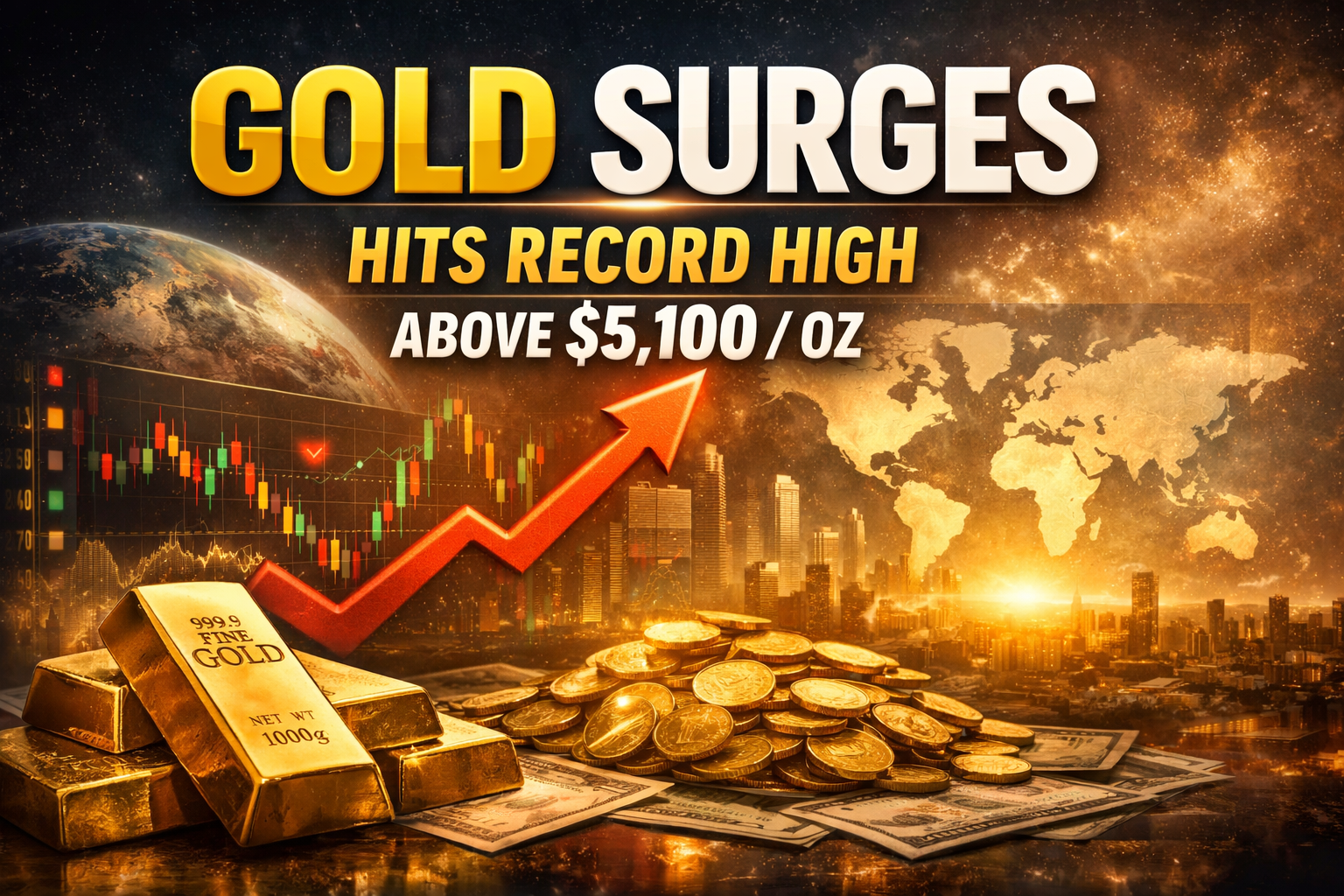
Gold prices crossed a historic milestone today, climbing above $5,100 per ounce for the first time ever. The surge reflects growing anxiety across global markets as investors look for stability in an uncertain world.
Alongside gold, silver and platinum also moved sharply higher, confirming that this is not an isolated spike but a broad shift toward safe assets.
For ordinary readers, this moment matters because record gold prices often signal deeper concerns about the global economy, politics, and the future of money itself.
What exactly happened today?
On January 26, 2026, gold prices surged rapidly in early trading, crossing the $5,100 mark before settling slightly below that level.
The move was driven by heavy buying from global investors, large funds, and institutions seeking protection against uncertainty.
At the same time:
- Silver jumped to new lifetime highs
- Platinum followed closely, touching record territory
- Palladium also saw strong upward momentum
Together, these moves suggest investors are not betting on a single asset — they are repositioning their portfolios for safety.
Why gold rises during uncertain times
Gold is often called a “safe-haven asset” because it is trusted across countries, cultures, and financial systems.
People typically buy gold when:
- They fear political instability
- Trade disputes threaten economies
- Currencies lose value
- Financial markets become volatile
Unlike stocks or bonds, gold does not depend on company profits or government promises. That independence is what makes it attractive during periods of stress.
What is driving this surge right now?
- Growing global tension
Political uncertainty and renewed trade threats have unsettled markets. When global cooperation weakens, investors reduce risk and protect capital — and gold is often the first destination.
- A weaker U.S. dollar
Gold is priced in dollars. When the dollar weakens, gold becomes cheaper for buyers using other currencies, increasing demand. This currency effect has played a major role in today’s rally.
- Strong institutional demand
Large institutional buyers, including long-term investors and reserve managers, have continued accumulating gold. This steady demand has tightened supply and pushed prices higher.
- Uncertainty around interest rates
Gold does not earn interest. But when future rate policies appear unclear or unstable, investors often prefer holding physical assets rather than financial promises.
Why silver is rising even faster
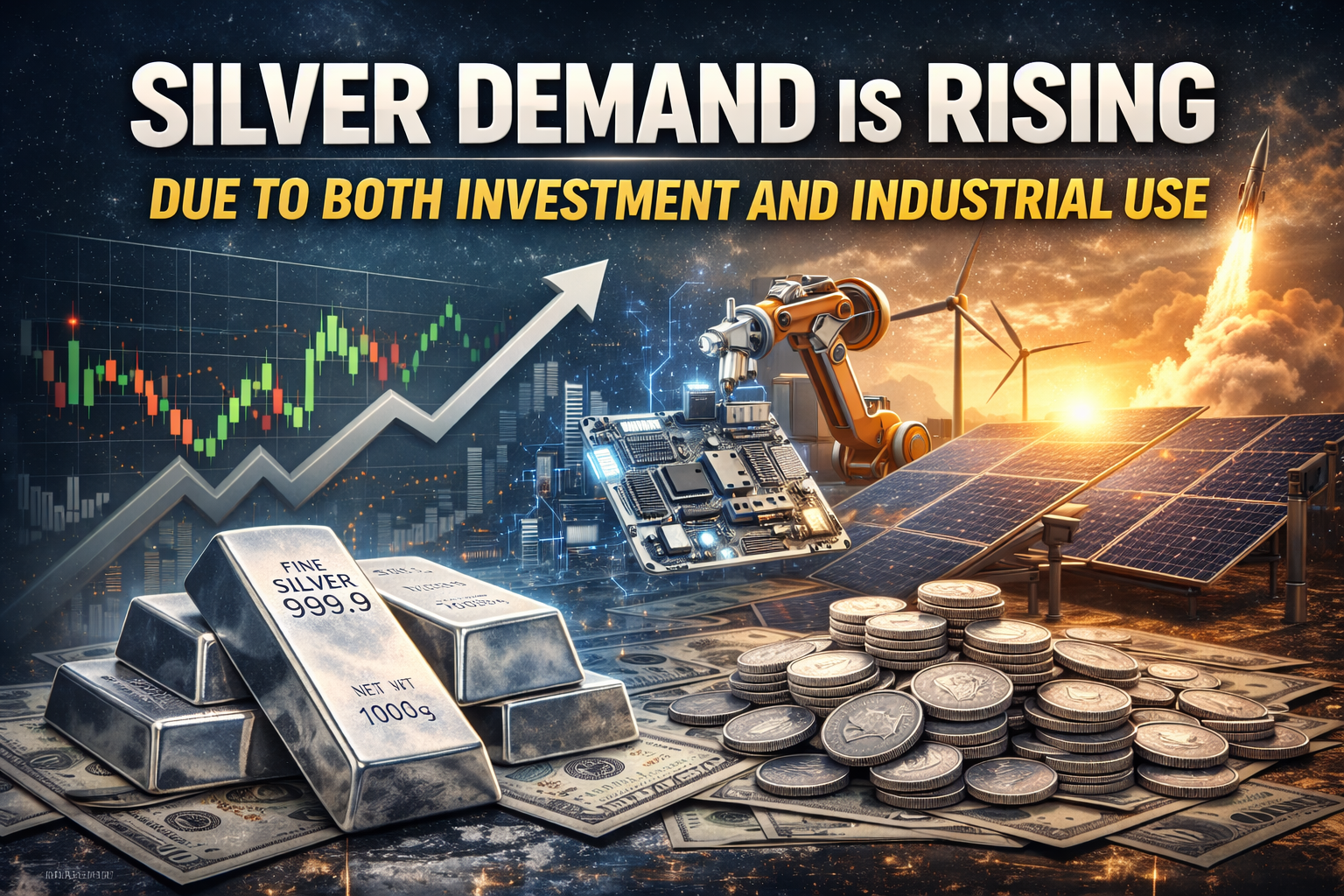
Silver plays a dual role in the global economy:
- It acts as a store of value like gold
- It is widely used in industries such as electronics and clean energy
This combination allows silver prices to rise sharply when both investment demand and industrial expectations improve.
What this rally tells us about global sentiment
Gold does not rise simply because markets are optimistic. It rises when people feel the need for protection.
“When confidence fades, gold becomes insurance against the unknown.”
This rally suggests many investors believe the coming months may bring:
- Economic volatility
- Policy uncertainty
- Geopolitical friction
What this means for everyday people
For most people, record gold prices are felt in daily life rather than on trading screens.
Key impacts include:
- Higher jewelry prices
- Increased wedding and festival costs
- Rising import bills for gold-dependent economies
- Greater pressure on household budgets
At the same time, high gold prices often reflect deeper economic stress that can influence fuel prices, currencies, and stock markets.
Buying gold after a sharp price surge can be risky. Sudden corrections are common after rapid rallies.
How investors usually react next
After major price milestones, markets often pause. Three outcomes are possible:
- Prices stabilize as buyers wait
- A short-term correction occurs
- Another surge follows if uncertainty deepens
History shows that gold markets rarely move in straight lines.
Why this matters beyond gold
Gold’s rise is not just about metal — it is about trust.
When investors move heavily into gold, it often signals:
- Reduced confidence in currencies
- Doubts about economic coordination
- Fear of unexpected shocks
In that sense, gold prices act as a global emotional indicator.
Key Takeaways
- Gold crossed $5,100 per ounce, reaching a historic high.
- Silver and platinum also surged, confirming a broad safe-haven move.
- Global uncertainty, weaker currencies, and policy concerns are driving demand.
- High gold prices affect everyday life through jewelry costs and imports.
- Rapid price rises can reverse suddenly — caution is essential.
What to watch next
As markets digest this historic move, attention will focus on:
- Political developments
- Trade and tariff signals
- Central bank messaging
- Currency movements
If uncertainty remains high, gold may stay elevated. But if confidence returns, prices could cool just as quickly.
For now, one message is clear: the world is paying a premium for safety.