
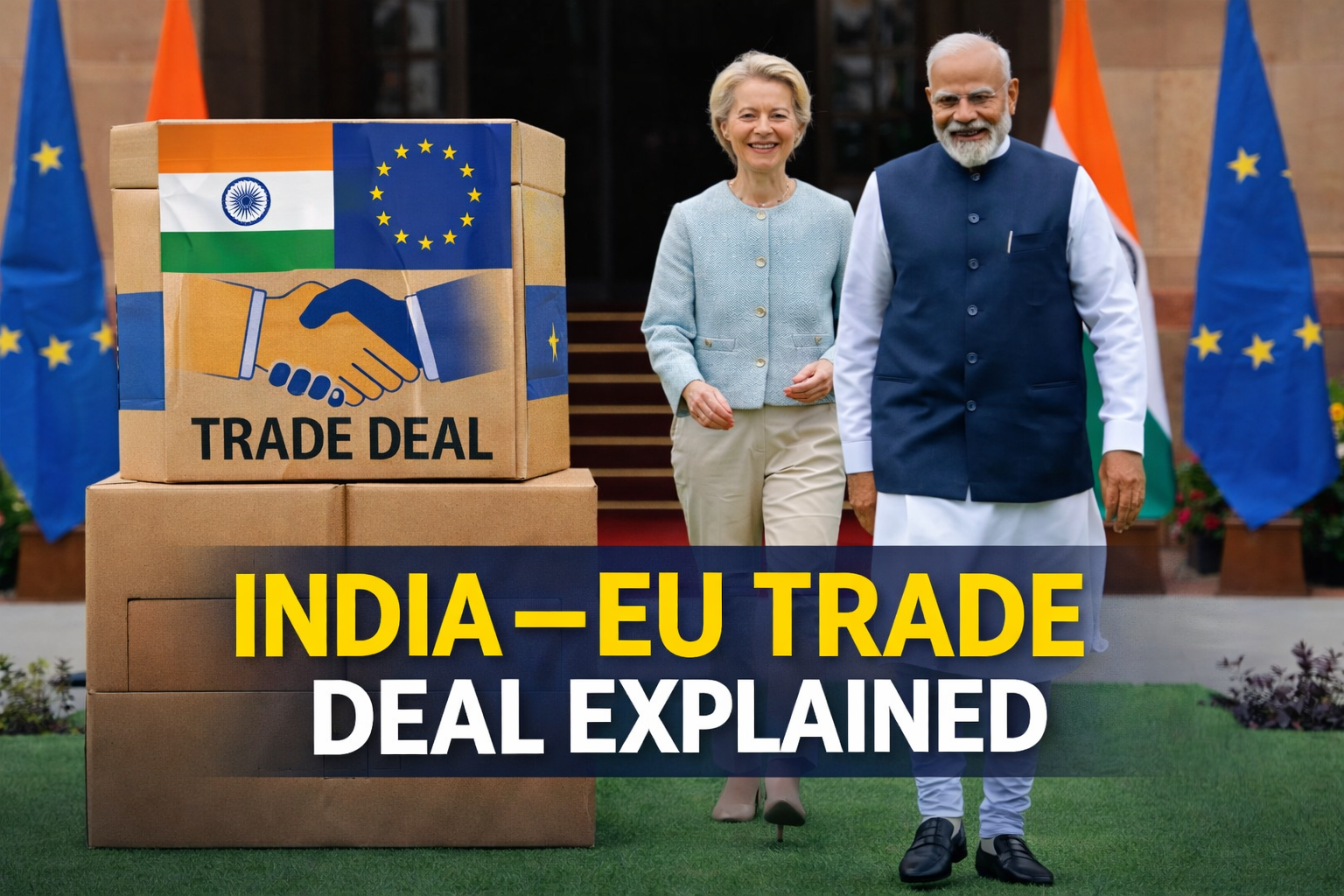
A decisive moment in India–EU trade relations
India and the European Union reached a decisive breakthrough on January 27, 2026, by concluding negotiations on a long-pending Free Trade Agreement (FTA). The move marks one of the most significant trade milestones in India’s recent economic history.
The agreement comes at a time when global trade is being reshaped by uncertainty, supply-chain shifts, and slowing growth in major economies. For India, the deal represents a strategic step toward deeper integration with high-income markets.
For ordinary readers, this moment matters because trade agreements eventually affect prices, jobs, business opportunities, and long-term income stability.
What exactly happened today?
On January 27, 2026, India and the European Union announced that negotiations on their Free Trade Agreement have been successfully concluded.
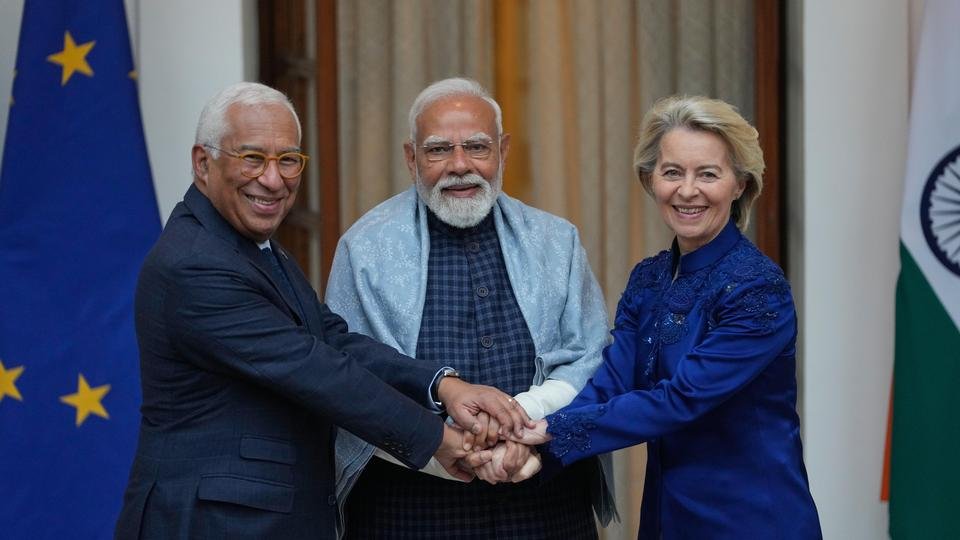
This means:
- ==Both sides have agreed on tariff reductions, trade rules, and safeguards==
- The political consensus is in place
- The agreement now moves to legal vetting and ratification
Importantly, the deal is not yet in force. Implementation will happen in phases after approvals are completed on both sides.
Why trade agreements matter during uncertain times
Trade agreements become especially important when the global economy is unstable.
Countries pursue such deals when:
- Growth in traditional markets slows
- Supply chains need diversification
- Businesses seek predictability
- Governments want long-term economic anchors
Unlike short-term policy moves, trade agreements shape economic direction over decades. That long horizon is what makes this deal strategically important.
What is driving this agreement right now?
Four forces are pushing this agreement forward at the same time.
- Shifting global supply chains
Companies across the world are reducing dependence on limited manufacturing hubs. India’s scale, workforce, and growth potential make it an attractive long-term partner.
- India’s push for export-led growth
India is actively expanding market access for its exporters. Deeper entry into the European market supports manufacturing, services, and job creation.
- Europe’s search for reliable partners
For Europe, India offers a large consumer base, growing industrial capacity, and a stable long-term economic relationship.
- The need for predictable trade rules
Clear rules reduce uncertainty for businesses, encouraging investment and long-term planning.
The heart of the deal: tariffs explained simply
Tariffs are import duties charged when goods enter a country. High tariffs make imported products expensive and limit competition.
Before this agreement:
- Many European goods entering India faced import duties ranging from 20% to as high as 110%
- High tariffs limited imports and kept prices elevated
- Advanced machinery and niche products were often costly due to duties
Under the Free Trade Agreement:
- More than 90% of traded goods will see tariff reductions or eliminations over time
- Cuts are gradual, not sudden
- Sensitive sectors are protected through exclusions and phased timelines
This approach balances market opening with domestic industry protection.
Cars: the clearest before-and-after example
Imported cars have long been one of the most protected categories in India.
Earlier:
- Import duties reached up to 110%
- A car priced at ₹40–50 lakh abroad often crossed ₹1 crore in India
- Imports remained extremely limited
What changes under the agreement:
- A limited number of European petrol and diesel cars will see duties reduced to around 40% initially
- Over time, duties may decline further toward ~10%
- Electric vehicles remain excluded in early phases, protecting India’s EV roadmap
These changes are phased, giving domestic manufacturers time to adjust.
What else may become cheaper over time?
Gradual tariff relief is expected on:
- Wines and spirits
- Olive oil and specialty food products
- Medical and optical equipment
- Industrial machinery and components
These items are not daily essentials, but lower duties can:
- Improve availability
- Reduce long-term costs for hospitals and industries
- Increase consumer choice in urban markets
What this deal means for Indian exports
The biggest upside for India is improved access to a high-income market with stable demand.
Indian exporters are expected to gain from:
- Lower duties in European markets
- Reduced paperwork and compliance hurdles
- More predictable access conditions
Key beneficiary sectors include:
- Textiles and garments
- Engineering goods
- Jewellery and processed products
Stronger exports support factory output, MSMEs, and employment.
What this means for everyday Indian households
For middle-class families, the impact will be slow but meaningful.
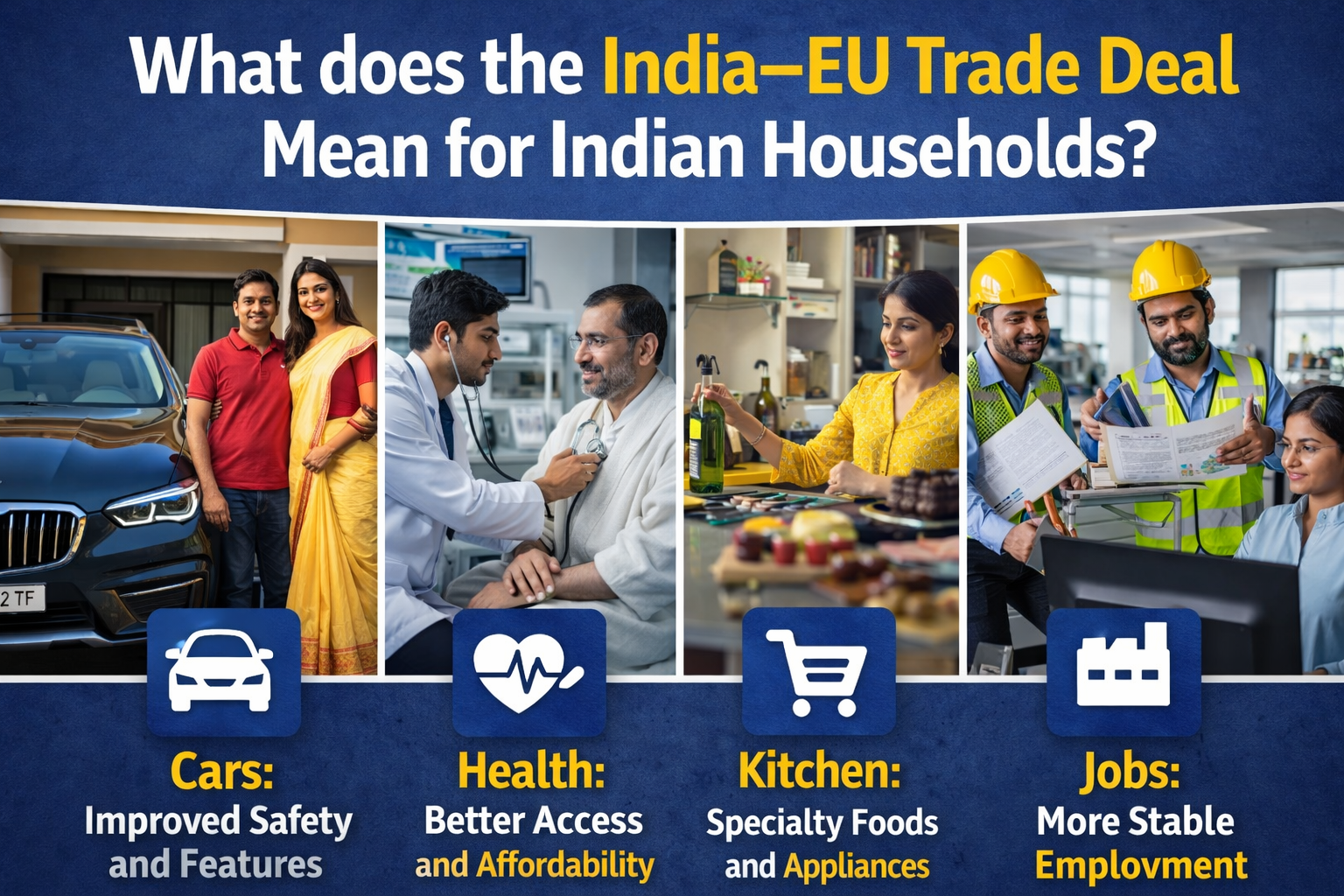
Key areas where people may feel changes over time:
- Imported cars remain premium, but competition can improve safety, features, and price discipline among domestic brands
- Lower duties on medical equipment can gradually reduce hospital costs and improve access to diagnostics
- Specialty food items and appliances may become slightly more affordable and easier to access
- Export growth supports more stable jobs and MSME income
The biggest gain is income security, not instant discounts.
Important caution for readers
Trade agreements do not deliver overnight results.
Benefits depend on:
- Careful implementation
- Clear tariff schedules
- Industry adaptation
- Policy consistency
Short-term expectations should remain realistic. The real impact shows up in phases, not in a single month.
How businesses usually react next
After major trade agreements:
- Companies study detailed tariff schedules
- Importers and exporters adjust sourcing plans
- Investors reassess long-term commitments
- Governments publish sector-wise timelines
This phase determines who benefits first.
Why this matters beyond trade numbers
This agreement is not just about imports and exports. It reflects long-term economic trust, strategic cooperation, and India’s expanding role in global trade networks.
“The real story is not the announcement — it’s how the timelines, safeguards, and market access rules reshape trade over the next decade.”
In that sense, this is both an economic and strategic milestone.
Key Takeaways
- India and the EU concluded negotiations on a major Free Trade Agreement on January 27, 2026.
- Import duties on many goods will be reduced gradually, not immediately.
- Car tariffs, once as high as 110%, will fall in phases for limited categories.
- Indian exports gain stronger access to European markets, supporting jobs and growth.
- The real impact will unfold steadily over the coming years.
What to watch next
As the agreement moves toward implementation, attention will focus on:
- Detailed tariff schedules and timelines
- Ratification progress
- Sector-specific safeguards
- Early signals from exports, jobs, and investment
For now, one message is clear: India has taken a decisive step toward deeper, more resilient global trade integration.